
The Reserve Bank of India's Financial Stability Report indicates that the interim peace deal between the US and Iran has favourably shifted the balance of risks, reducing headwinds from the West Asia conflict. However, it cautions that exchange rate volatility could increase if crude oil prices spike due to delayed normalisation of supply chain disruptions.

IT major Tech Mahindra reported a 28.4 per cent increase in consolidated net profit for the June quarter, reaching Rs 1,465 crore, driven by broad-based growth across manufacturing and financial services, and expressed confidence in a positive demand environment for the rest of the year.
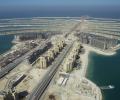
Ongoing geopolitical tensions in West Asia have slowed deal momentum in Dubai's luxury residential market, but Indian high-net-worth individuals (HNIs) are not exiting their marquee assets, with any 'discounted' resale deals attributed to investor liquidity stress rather than geopolitical flight.

The World Bank has increased India's economic growth projection for FY27 to 6.6 per cent, citing resilient domestic demand, while simultaneously cutting its global economic growth outlook due to the conflict in West Asia.

Foreign investors pulled out Rs 21,000 crore (around $2.3 billion) from Indian equities over the last four trading sessions amid deteriorating global risk sentiment triggered by the West Asia crisis.

The Reserve Bank of India (RBI) maintained its key policy rates for the fourth consecutive time, keeping the repo rate at 5.25 per cent, while the benchmark BSE Sensex closed 152 points higher in a volatile session, recovering from an intraday dip.
S&P Global Ratings has increased India's GDP growth forecast for the next fiscal year to 7.1 per cent, citing private consumption, investment, and exports as key drivers. However, the agency also cautioned that the conflict in the Middle East could strain India's fiscal position due to higher energy prices.

Indian Hotels Company (IHCL) reported a healthy 14.6 per cent consolidated revenue growth in Q1 FY27, largely driven by a robust 17.6 per cent increase in domestic operations, offsetting geopolitical disruptions. Brokerages anticipate sustained growth, with Motilal Oswal Research projecting 12-14 per cent growth in FY27, supported by strong leisure demand and an asset-light expansion pipeline.

India's fresh investment plans in Q1FY27 surged 71 per cent to 14.77 trillion, primarily driven by four large nuclear power projects worth 6.5 trillion, according to investment monitoring firm Projects Today. Excluding these nuclear projects, fresh investment plans actually declined 4.27 per cent quarter-on-quarter.

'I don't see fear becoming a dominant factor for retail investors.'
HDFC Bank reported an 8.04 per cent increase in its March quarter consolidated net profit to Rs 20,350.76 crore, but highlighted potential near-term risks for small-business borrowers due to the West Asia conflict. The bank's CEO also addressed the recent resignation of its non-executive chairman and hinted at a potential top-level reorganisation.

S&P Global Ratings warns that a sustained rise in crude oil prices to $130 per barrel could significantly slow India's economic growth, weaken fiscal metrics, and strain corporate and banking sector performance, potentially reducing growth by up to 80 basis points.

The report notes that equities had faced pressure from elevated valuation premiums, subdued nominal gross domestic product (GDP) and earnings growth, sustained foreign portfolio investor (FPI) selling, artificial intelligence (AI) infrastructure euphoria, and external shocks including US tariffs and a spike in crude oil prices due to geopolitical tensions in West Asia. However, several of these factors are now reversing.

Indian pharmaceutical companies are not rushing to relocate manufacturing to the United States despite former President Donald Trump's renewed threat of tariffs up to 200 per cent on imported generic drugs. Instead, they are leveraging existing US plants, contract manufacturers, and making selective investments in complex products while maintaining India as their primary production hub.

The Indian government is set to accelerate reforms, including measures to enhance foreign direct investment, speed up divestment, and boost asset monetisation, to maintain economic growth despite rising fuel and fertiliser import costs driven by the West Asia crisis.

Despite reporting a weaker-than-expected net loss of Rs 2,536 crore for Q4FY26, largely due to a significant non-cash forex loss, analysts remain optimistic about IndiGo's long-term prospects, citing strong demand trends, a favourable pricing outlook, and strategic cost-control measures.

A potential US-Iran peace deal, expected to be signed on June 19, is anticipated to ease geopolitical stress and benefit various sectors, particularly in India, with analysts suggesting investors await finer details before making significant moves.

India's Goods and Services Tax (GST) collections saw a significant 14 per cent increase in June, reaching approximately Rs 1.95 lakh crore. This surge was primarily driven by a substantial 34.6 per cent growth in tax mop-up from imports, alongside a 6.5 per cent rise in domestic supplies, reflecting the country's economic resilience despite global uncertainties.

Indian Hotels Company Ltd (IHCL) is expected to benefit from higher room rates, rising occupancy, and strategic acquisitions, with analysts projecting double-digit revenue growth for FY27 driven by strong domestic demand and a favourable demand-supply dynamic.

"With the leverage available, I believe the scheme remains reasonably attractive," said P D Singh, India and South Asia Chief Executive Officer, Standard Chartered Bank, regarding the Foreign Currency Non-Resident (Bank) or FCNR (B) deposits.

Moody's Ratings has reduced India's GDP growth forecast for 2026 to 6 per cent, citing subdued private consumption, capital formation, and industrial activity due to higher energy costs and global uncertainties.

Indian defence stocks have seen an average year-on-year gain of 67 per cent, driven by renewed interest following 'Operation Sindoor' and a broader increase in global geopolitical tensions, with the combined market capitalisation of 18 firms increasing by approximately 2.3 trillion.
'When I look at India's relative valuations, these are by far the lowest I have seen in my 35-year career.' 'The relative 12-month trailing performance is among the weakest I have seen, and foreign investor positioning is at a 16-17 year low.'

India's economy registered a robust 7.7 per cent growth in the fiscal year 2025-26, an increase from 7.1 per cent in the previous year, with the January-March quarter alone seeing a 7.8 per cent expansion.

The start of the West Asia conflict has led to a sharp increase in crude-linked raw material prices, pushing up the price of helmets across the country.
JPMorgan has downgraded Indian equities to 'neutral' from 'overweight', citing elevated valuations, rising earnings risks, and limited exposure to next-generation technology like AI. The brokerage believes other emerging markets offer more attractive risk/reward propositions despite India's strong structural growth story.

Foreign investors have withdrawn over Rs 88,000 crore from Indian equities this month, driven by geopolitical tensions, a weak rupee, and concerns about rising crude oil prices.

Commerce and Industry Minister Piyush Goyal announced that India expects to operationalise nine free trade agreements (FTAs) within the next 10 months, with plans for an additional three to four significant pacts over the coming year, reinforcing India's ambition to become a global manufacturing and investment hub.

Indian benchmark indices Sensex and Nifty closed marginally lower due to profit-taking, following the Reserve Bank of India's decision to keep the repo rate unchanged while lowering its growth expectations for the current fiscal year and forecasting higher inflation.

The Federation of Indian Export Organisations (FIEO) has appealed to the Reserve Bank of India (RBI) for liquidity support to Indian exporters, citing a significant increase in freight costs and extended payment cycles due to the ongoing West Asia conflict.

The Indian central government has reduced its total expenditure by approximately 60,000 crore in FY26, below its revised estimate, to successfully achieve the fiscal deficit target of 4.4 per cent of gross domestic product (GDP), according to the latest data from the Controller General of Accounts (CGA).

'Markets never fully lose hope. But an important shift could come if the Strait remains closed -- moving from high prices to no prices.'

The Indian rupee rebounded against the US dollar after the Reserve Bank of India (RBI) restricted banks' net open positions in dollars. This move prompted banks to sell dollars, providing temporary support for the rupee amidst ongoing geopolitical tensions and rising oil prices.

Amidst a sharp run-up in gold and silver prices, investors are advised to rebalance their portfolios by booking partial profits in precious metals and reallocating to domestic equities and debt, according to financial experts.

Indian stock markets are set to be influenced by ongoing developments in the US-Iran conflict, fluctuations in crude oil prices, and the latest quarterly earnings reports from major corporates, with foreign investor activity also playing a crucial role.
ICICI Bank reported a 9.28 per cent increase in its consolidated net profit to Rs 14,755 crore for the March quarter of FY26, primarily driven by a nearly 90 per cent reduction in provisioning. The bank's executive director, Sandeep Batra, noted strong asset growth but expressed caution regarding the geopolitical situation in West Asia.

The Indian rupee depreciated 20 paise to close at a fresh all-time low of 94.88 against the US dollar, driven by surging Brent crude oil prices, hovering around USD 115 per barrel, and persistent foreign capital outflows.

The rupee recovered to 95.18 against the US dollar after hitting an all-time intra-day low of 95.44. The recovery was supported by possible RBI intervention amid renewed Gulf tensions and rising crude oil prices.

TVS Motor Company is strategically positioned for sustained outperformance in the domestic two-wheeler industry, propelled by increasing market share in scooters, premium motorcycles, electric vehicles (EVs), and robust export growth, according to analysts.

'... with the rest split between mid and smallcaps, as valuations are becoming more attractive across segments.'
